Designing an Immersive
Audiobook Experience
Audiobook listening is about immersion and continuity. Playback alone isn't enough.
The Love
Hypothesis
Ali Hazelwood
Chapter 12: The Conference
Ali Hazelwood · Narrated by Callie Dalton
Subscribe now
Unlimited audiobooks · $9/mo
Hot Girl Romance Club
Live now
Currently reading
Love Hypothesis
Ali Hazelwood
Love Hypothesis
Ali Hazelwood
Continue Listening
Beach
The
Midnight
Ocean
12 friends listening
Book Club Session
Join now →
You are reading
Audioh Case Study
Scroll to explore
Thinking Layer
Audiobook platforms prioritize catalog size over the actual listening experience.
Listeners care about immersion and emotional continuity. Playback alone isn't enough.
An audiobook interface built around listening flow and contextual discovery.
Higher listening completion rates and less navigation friction.
01 / Project Overview
Designing an Immersive
Audiobook Experience
AudioH is an audiobook platform that raised $250K in pre-seed funding. Instead of paying per book, listeners get unlimited access for $9/month. Authors keep 60% of royalties, much higher than industry standard. The part I was most excited to design was the social layer, where friends can listen together in real time.
Role
UI/UX Designer
Timeline
2024
Team
Product, Engineering, Design
Tools
Figma, Prototyping, User Research, Usability Testing
Outcome / Impact
The design helped AudioH raise $250K in pre-seed funding. The subscription model directly targets the 45% checkout abandonment problem. Offering authors 60% royalties brought in better content. The social layer is what sets AudioH apart. Investors kept calling it"Netflix for audiobooks."
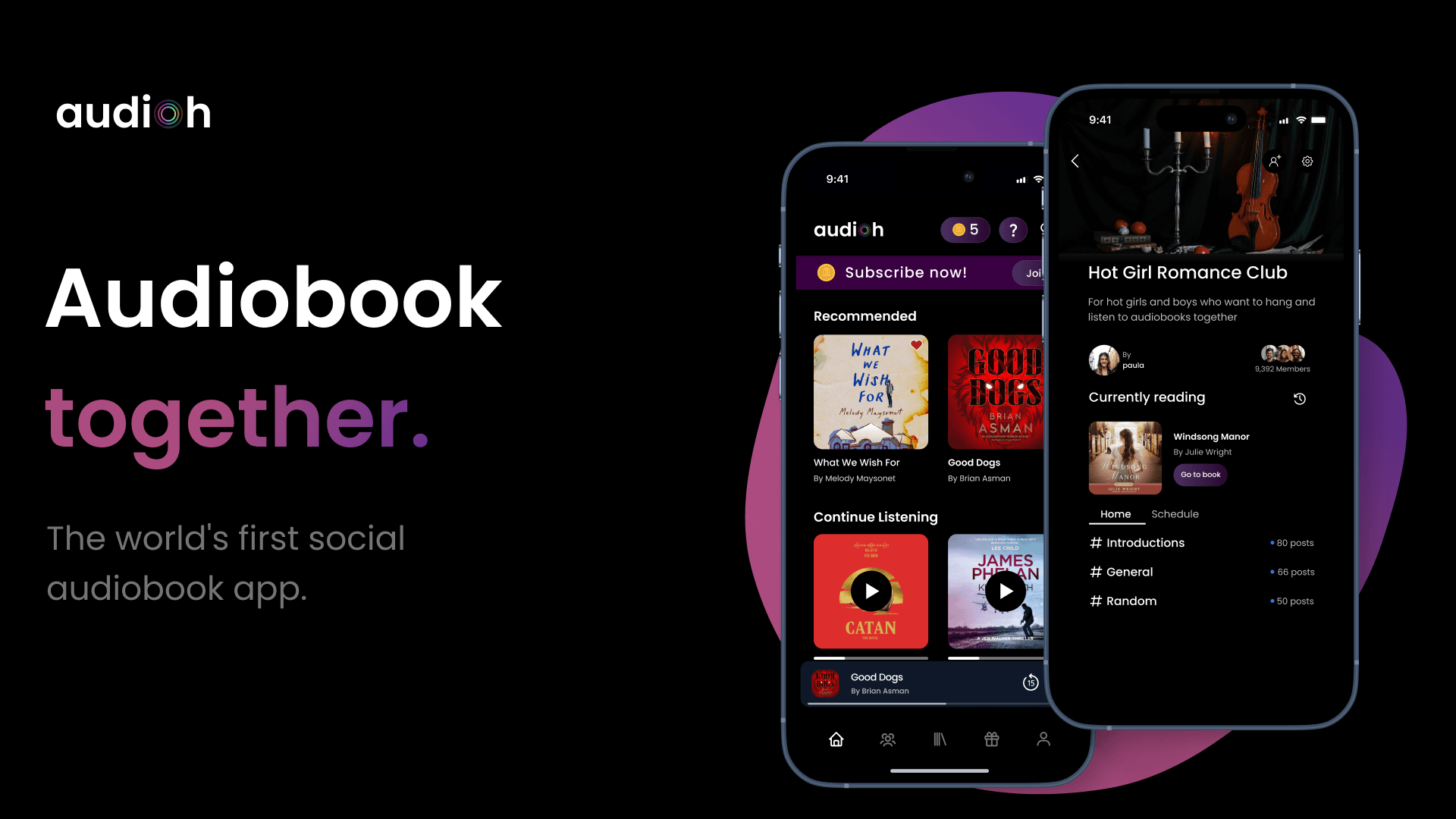
Project introduction
02 / The Problem
Current audiobook interfaces prioritize catalog navigation over the listening experience
The audiobook market suffers from expensive pay-per-book models with 45% price drop-off at checkout. Existing platforms lack social engagement features, making audiobook consumption an isolating experience. Listeners lose their place, struggle with navigation-heavy interfaces, and experience broken immersion that leads to abandonment.
Price
Drop-off
Engagement
Drop-off
Author
Drop-off
User Friction Points
Expensive pay-per-book models create high barriers
No social features make listening isolating
Navigation-heavy UIs break listening immersion
Poor content discovery beyond algorithms
Research & Discovery
Understanding the
Listening Experience
Before designing anything, I needed to understand how people actually listen to audiobooks, what makes them stop, and why the social side of reading hasn't translated to audio yet.
Research Goals
Understand how listeners discover, choose, and commit to audiobooks across platforms
Identify why social features haven't taken off in the audiobook space yet
Map the emotional journey from browsing to sustained listening and completion
Research Methods
User Interviews
Spoke with 12 regular audiobook listeners across Audible, Scribd, and Spotify to understand listening habits, pain points, and social behavior around books.
Competitive Analysis
Mapped feature sets, pricing models, and user reviews across Audible, Scribd, Spotify audiobooks, and Libby to identify gaps in the market.
Empathy Mapping
Synthesized interview data into empathy maps to understand what users say, think, do, and feel when consuming audiobooks.
Usability Testing
Tested early prototypes with 8 participants across two rounds, focusing on home screen navigation, the Listen Together feature, and book club onboarding.
Competitive Analysis
| Platform | Pricing | Social | Author Royalty | Discovery |
|---|---|---|---|---|
| Audible | Pay-per-book / Credit | None | ~25% | Algorithm-driven |
| Scribd | Subscription (limited) | None | ~30% | Curated lists |
| Spotify | Bundled with music | Shared playlists | Low | Algorithm + editorial |
| AudioH | $9/mo unlimited | Listen Together + Clubs | 60% | Social + curated |
The gap was clear: no platform combined affordable unlimited access with genuine social listening features.
Empathy Mapping
What listeners actually experience
Synthesized from 12 user interviews, this empathy map captures the core frustrations, behaviors, and unmet needs of audiobook listeners.
“Audiobooks are too expensive to take a chance on something new.”
“I wish I could talk about what I'm listening to with someone.”
“I keep losing my place and just give up.”
“The recommendations don't really get me.”
Is this book worth $15-20 if I don’t end up liking it?
I'm missing out on the book club conversations my friends have
There has to be a better way to discover books than algorithms
Listening alone feels different from reading in a café
Abandons cart when they see per-book pricing
Listens alone, switches between multiple apps
Skips chapters when navigation gets frustrating
Shares book recommendations over text instead of in-app
Frustrated by the cost of trying new audiobooks
Isolated — listening is a solo activity everywhere
Overwhelmed by massive catalogs with no clear path
Disconnected from the social side of reading
Key Research Findings
What the research revealed
of users abandon cart at checkout due to per-book pricing
interviewees said they wish they could share the listening experience
platforms offer real-time synchronized listening with friends
average author royalty across existing platforms
User Needs
Low-risk discovery
A way to try new books without committing $15-20 per title
Shared listening
Real-time audio sync so friends can listen and react together
Community spaces
Structured clubs for discussing books, not just passive consumption
Simple navigation
Interfaces that support immersion instead of breaking it
Problem Definition
Audiobook listeners need an affordable way to explore new titles without the financial risk of per-book pricing.
Readers who enjoy discussing books have no way to bring that social experience into audiobook listening.
Authors need a platform that offers fair compensation to sustain quality content creation.
Early Thinking
Home Screen
Layout exploration — card grid vs list
Audio Player
Immersive playback — minimal controls
User Flow
Core journey — browse to social listening
03 / Key Insight
Listening is a continuous experience, not a navigation task.
Through user research, I found that listeners care most about staying in the zone. Every tap away from the player breaks the spell. The interface should serve the listener, not the library.
I don't want to browse when I'm in the middle of a chapter. I just want to keep listening and maybe share that moment with someone who gets it.
-- User Research Participant
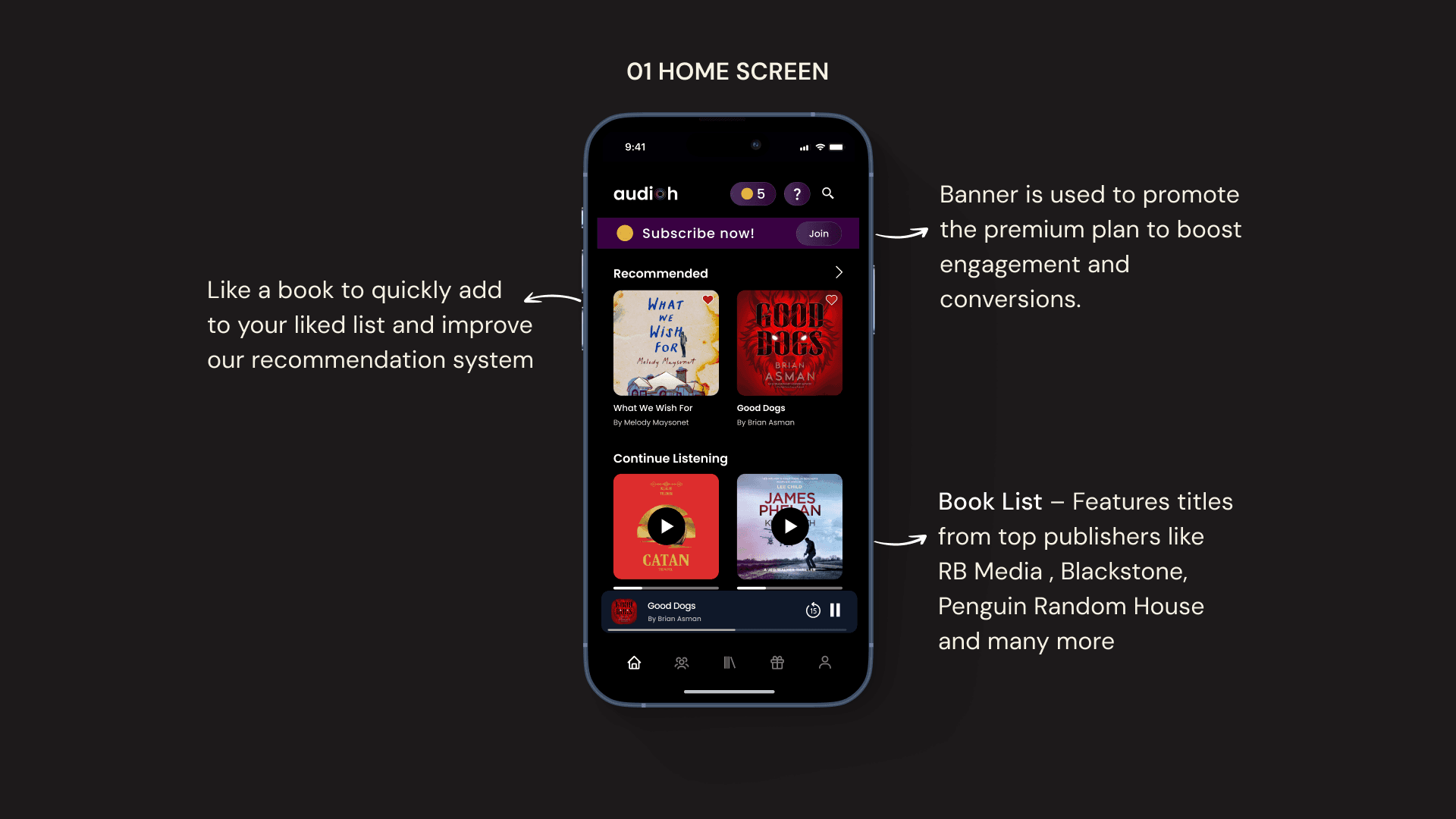
Home screen — interface breakdown
04 / Design Goal
What the design needed to achieve
Create an audiobook experience where the interface disappears and the story takes over.
Prioritize listening flow
Keep the listener immersed by minimizing navigation and maximizing contextual controls.
Contextual discovery
Surface relevant content inside the listening experience rather than in a separate browsing mode.
Social without disruption
Let friends listen together in a way that adds to the experience instead of interrupting it.
Emotional continuity
Preserve mood and state across sessions so listeners always pick up right where they left off.
05 / System Thinking
How the listening experience is structured
User flows, information architecture, and interaction maps behind the system.
Listening Flow
How a listener moves through a session without friction.
Content Discovery Map
How listeners find their next book contextually.
Playback State Logic
States the player tracks to keep your place across sessions.
Design Progression
Problem
Catalog over listening
Insight
Continuity over navigation
System
Flow-first architecture
Experience
Immersive listening
06 / Exploration
Early sketches and concept exploration
Rough ideas before refinement. Player layouts, navigation patterns, and social integration.
Player Concepts
Minimalist vs. immersive player layouts
Navigation Patterns
Tab bar, gesture-based, contextual menus
Social Layer
Listen Together UI, chat overlays
Book Club Rooms
Group listening session interfaces
Discovery Feed
Social-driven content discovery
Onboarding Flow
Preference capture and first listen
07 / Wireframes
Low-fidelity interface structure
Defining the structural hierarchy before visual design, focusing on player-first architecture.
Home
Player
Discovery
Profile
08 / UI Design
Final interface with visual hierarchy
High-fidelity screens showing how the listening-first approach plays out visually.
Subscribe now
Unlimited audiobooks · $9/mo
Hot Girl Romance Club
Live now
Currently reading
Love Hypothesis
Ali Hazelwood
Love Hypothesis
Ali Hazelwood
Continue Listening
Beach
The
Midnight
Ocean
Home Screen
Continue listening takes priority over browsing
The Love
Hypothesis
Ali Hazelwood
Chapter 12: The Conference
Ali Hazelwood · Narrated by Callie Dalton
Now Playing
Immersive player with social listening integration
Reduces visual fatigue during long listening sessions. The dark palette pushes book cover art and player controls forward, making them the main visual elements.
Pink-to-purple gradients mark interactive elements and progress indicators. On a dark canvas, a little color goes a long way. It stays functional without getting loud.
Minimal text at small sizes keeps focus on content. Labels use tracking and opacity to create visual layers. Book titles and chapters use slightly heavier weights for scannability.
Color System
Typography
Component Library
Screen Breakdowns
Annotated design decisions
Each screen was designed to address a specific research finding. Here's how the research translated into interface decisions.
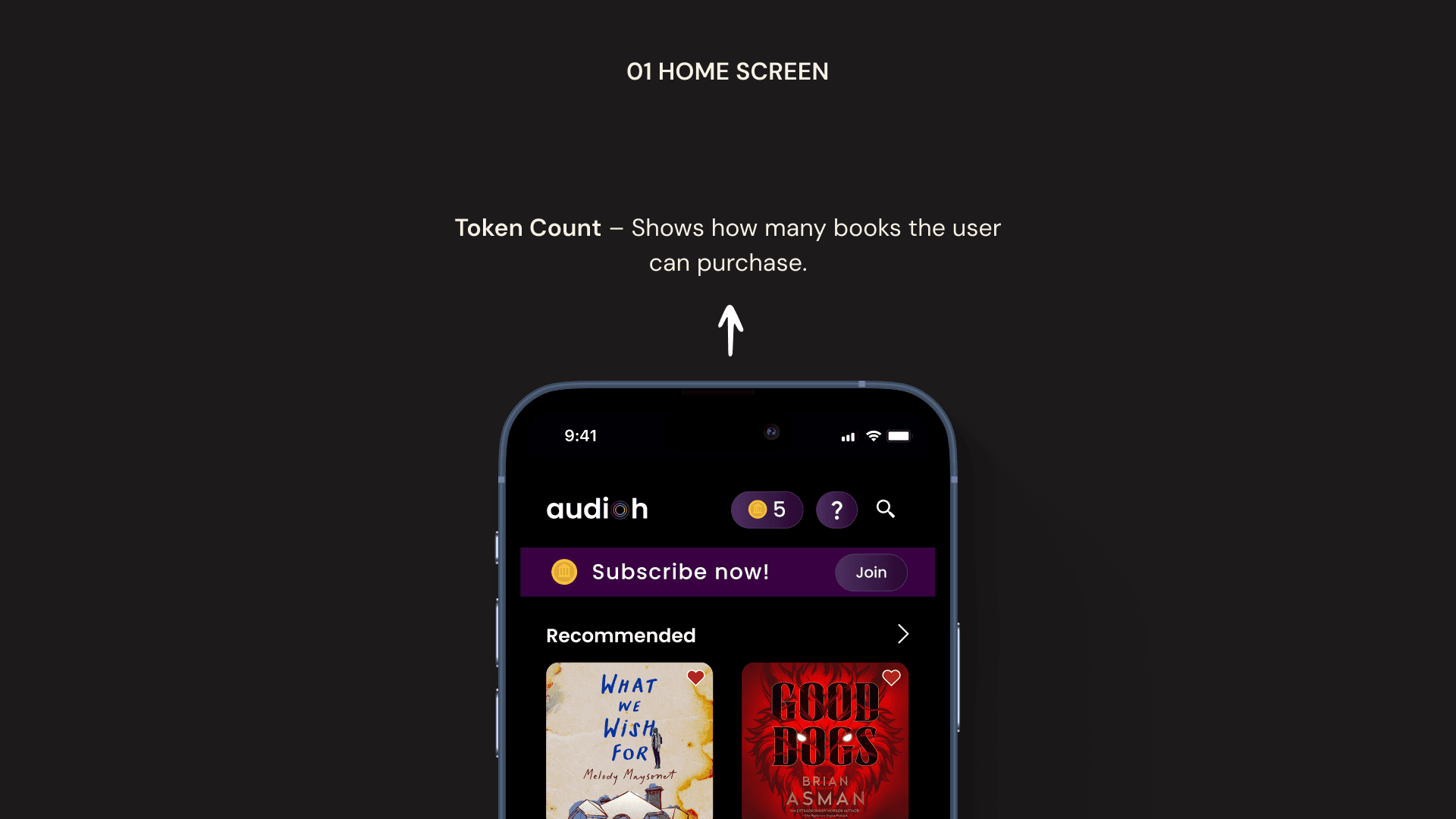
Home screen — token system and subscription CTA
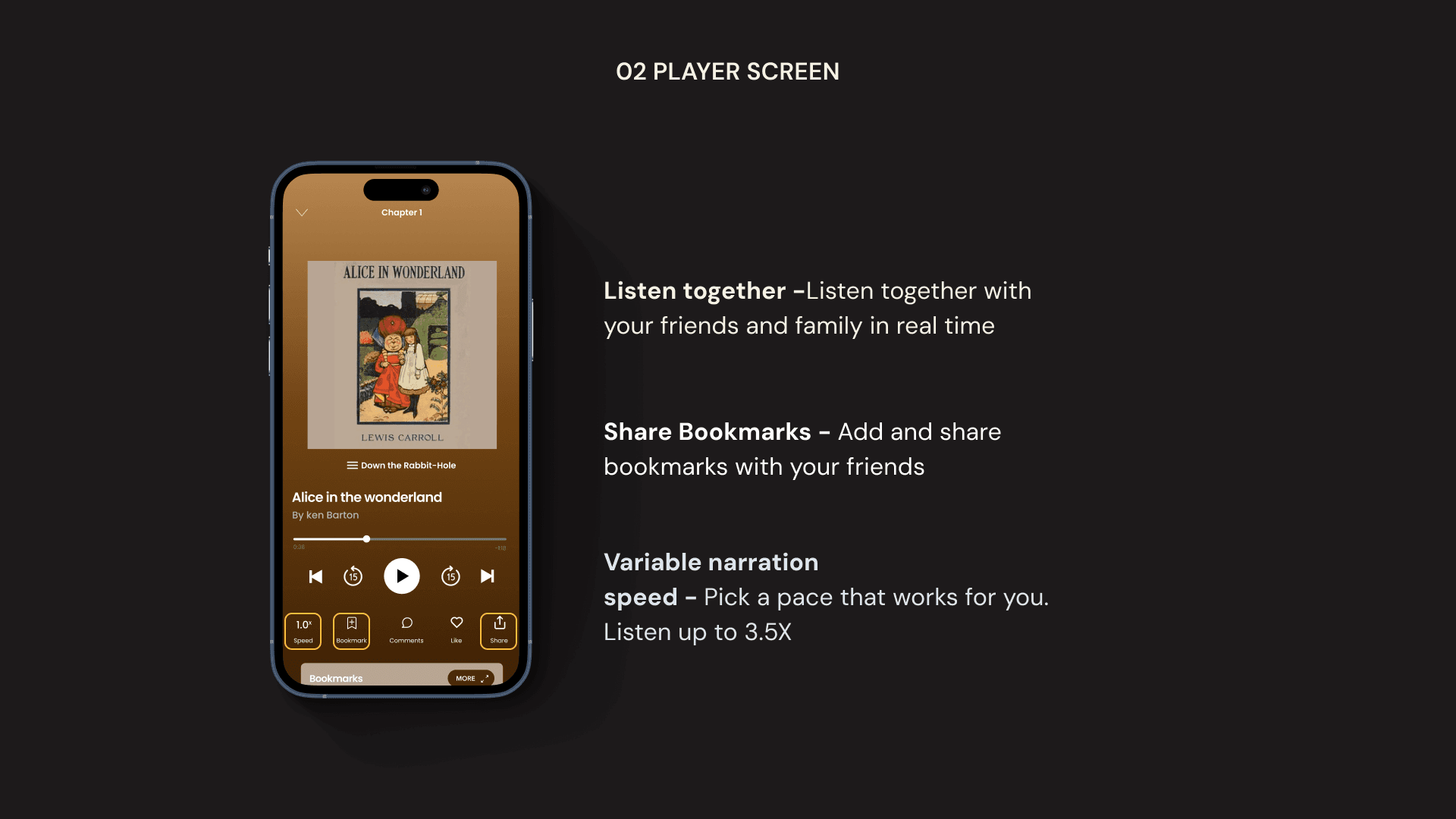
Player screen — listen together, bookmarks, variable speed
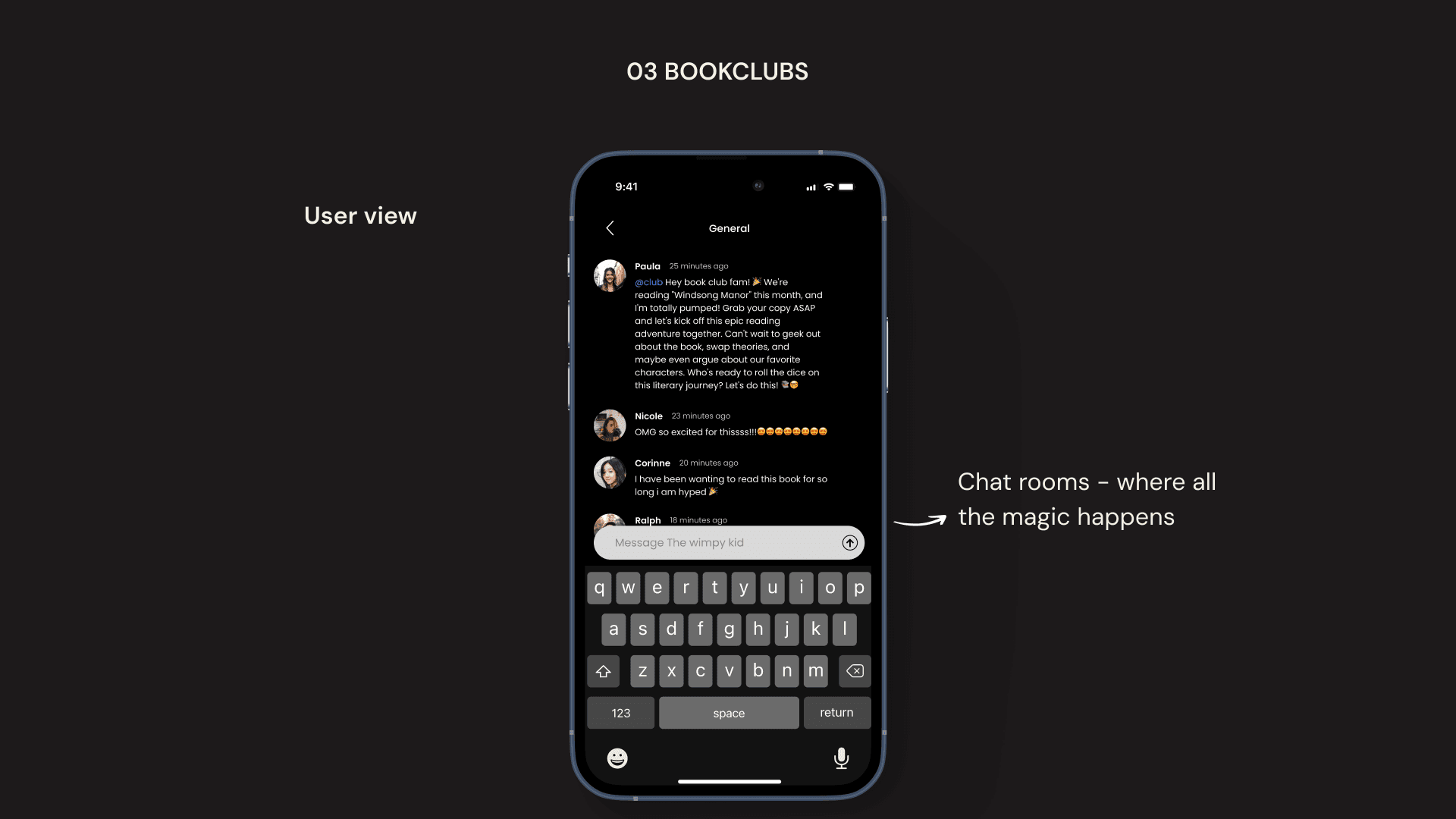
Book clubs — community chat rooms
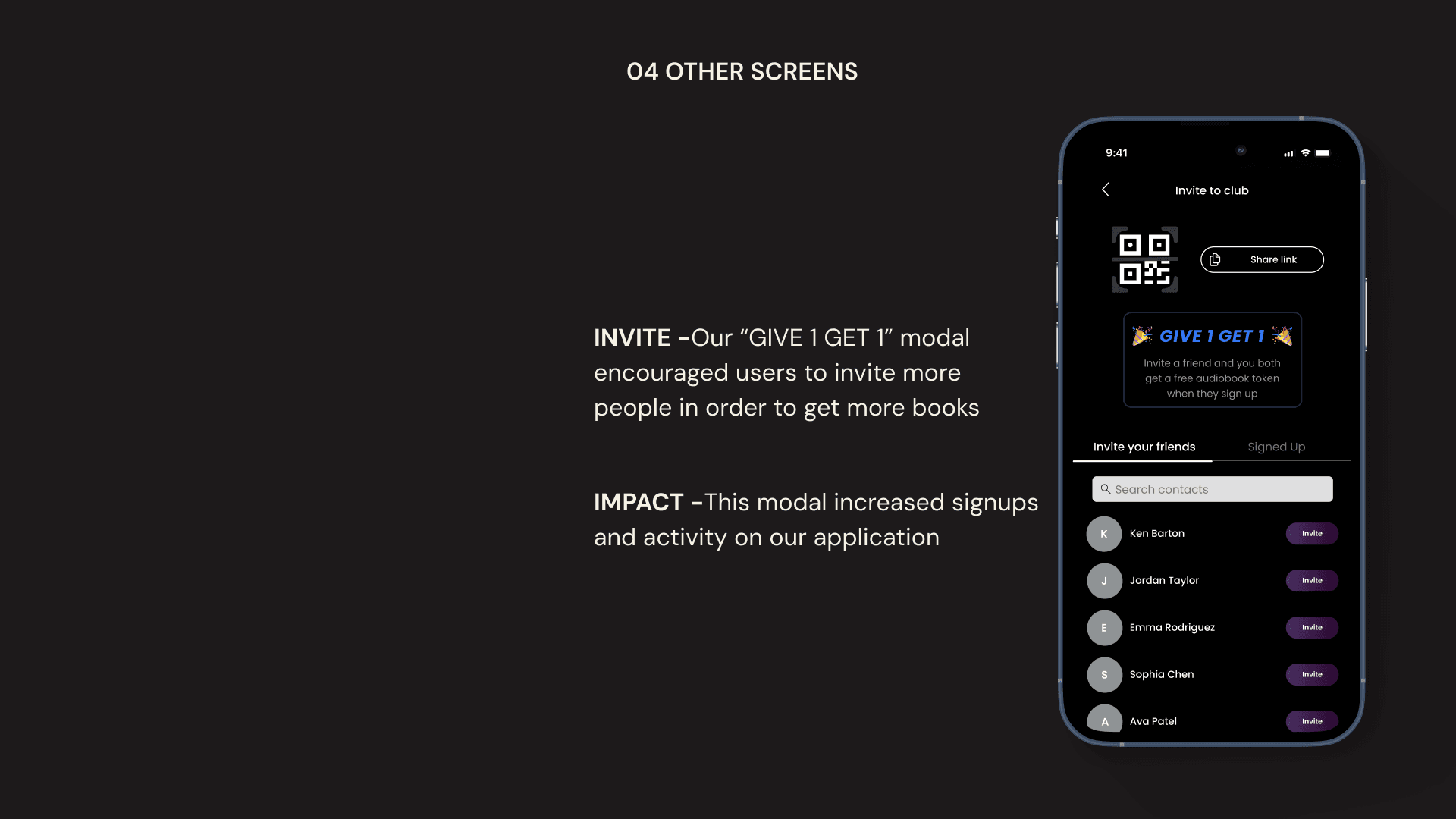
Referral — Give 1 Get 1 growth loop
Audioh — World's first audio social app
09 / Final Experience
The full user journey
From opening the app for the first time to becoming a daily listener.
Discover
Open the app to a personalized home screen. Book clubs, friends' activity, and your current read surface immediately.
Start Listening
One tap to enter the player. No intermediate screens. The book cover expands, the interface recedes.
Pause
Sleep timer, bookmark, or manual pause. Your exact position is saved across all devices.
Resume
Return to exactly where you left off. A gentle fade-in replays the last 10 seconds for context.
Continue Story
Invite friends to listen together. Share highlights. Finish the book and find the next one without leaving the flow.
10 / Reflection
What I took away from this project
Designing AudioH changed how I think about interfaces where the content is time-based.
Player-first, not catalog-first
The biggest shift was reframing the app around the player rather than content browsing. That single decision shaped every screen that followed.
Social features must be opt-in
Listen Together works because it's there when you want it and invisible when you don't. Forcing social into a solo activity kills it.
State management is a design problem
Where the listener left off, their sleep timer preferences, syncing across devices. These feel like engineering tasks but they're actually UX decisions.
Subscription removes friction, adds expectation
A $9/month model removes the purchase decision but raises the bar. Every session has to feel worth coming back for.
What I would improve
Conduct more extensive A/B testing on the player controls layout for different hand sizes
Explore voice-based navigation for hands-free listening control
Build a more robust onboarding that captures listening preferences without feeling like a survey
Test the Listen Together feature with larger group sizes to understand social dynamics
Next Project