Cultural Narratives Through Streets
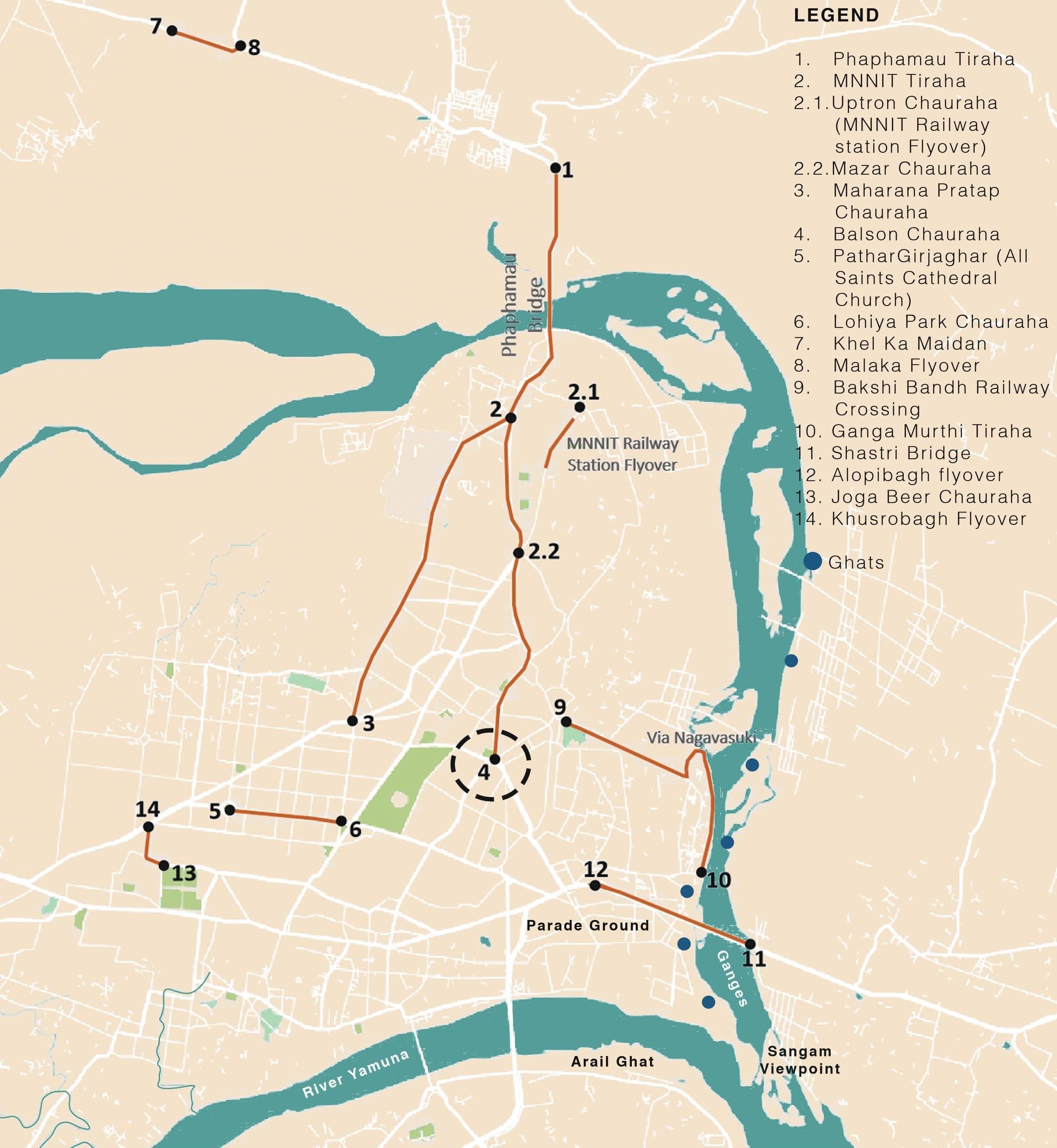
This project focused on the beautification and spatial enhancement of key processional routes for Maha Kumbh 2025, one of the largest human gatherings in the world.
The design interventions aimed to improve the spiritual, visual, and navigational experience for over 40 million pilgrims visiting the city.
Project Overview
This project focused on the beautification and spatial enhancement of key processional routes for Maha Kumbh 2025, one of the largest human gatherings in the world. The design interventions aimed to improve the spiritual, visual, and navigational experience for over 40 million pilgrims visiting the city.
Client
Prayagraj Mela Authority, Govt. of UP
Role
Architectural Design | Landscape Planning | Urban Aesthetics
Scope
13–14 Major Roads | Temporary + Permanent Installations
Design Goals

Challenge
The roads were generic, disconnected, and visually chaotic, lacking spatial hierarchy and intuitive wayfinding for a high-density spiritual event. This fragmentation disrupted pilgrim flow and failed to support the sacred, ephemeral nature of the Kumbh Mela.
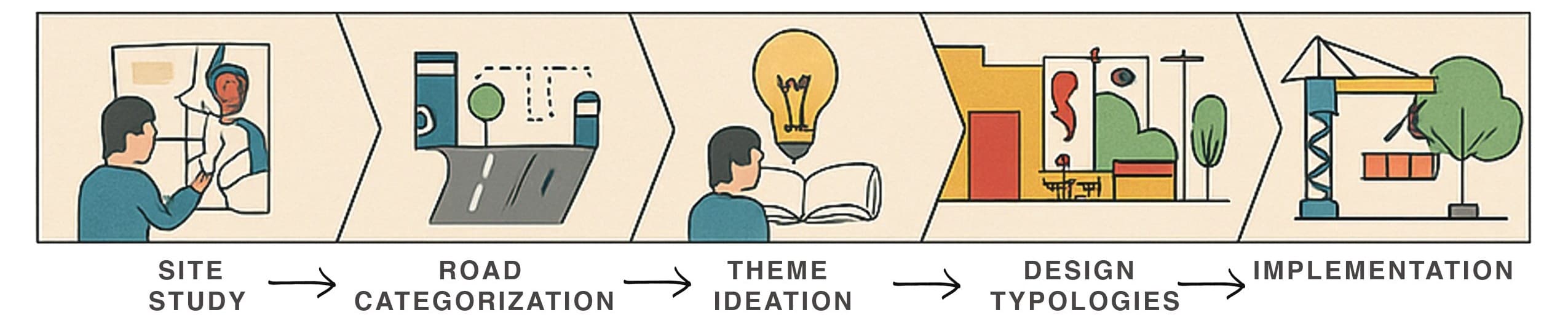
Sequential Narrative
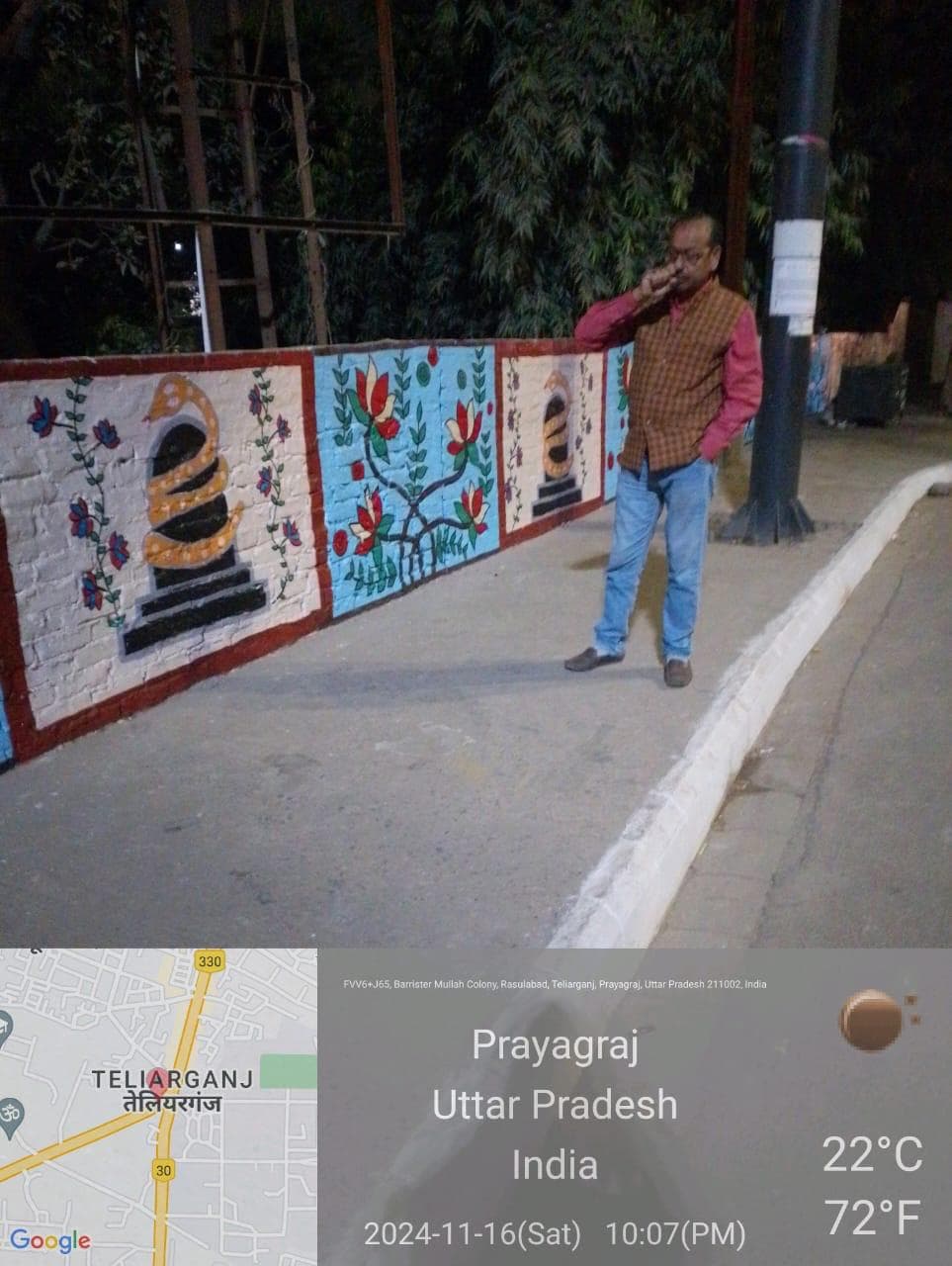
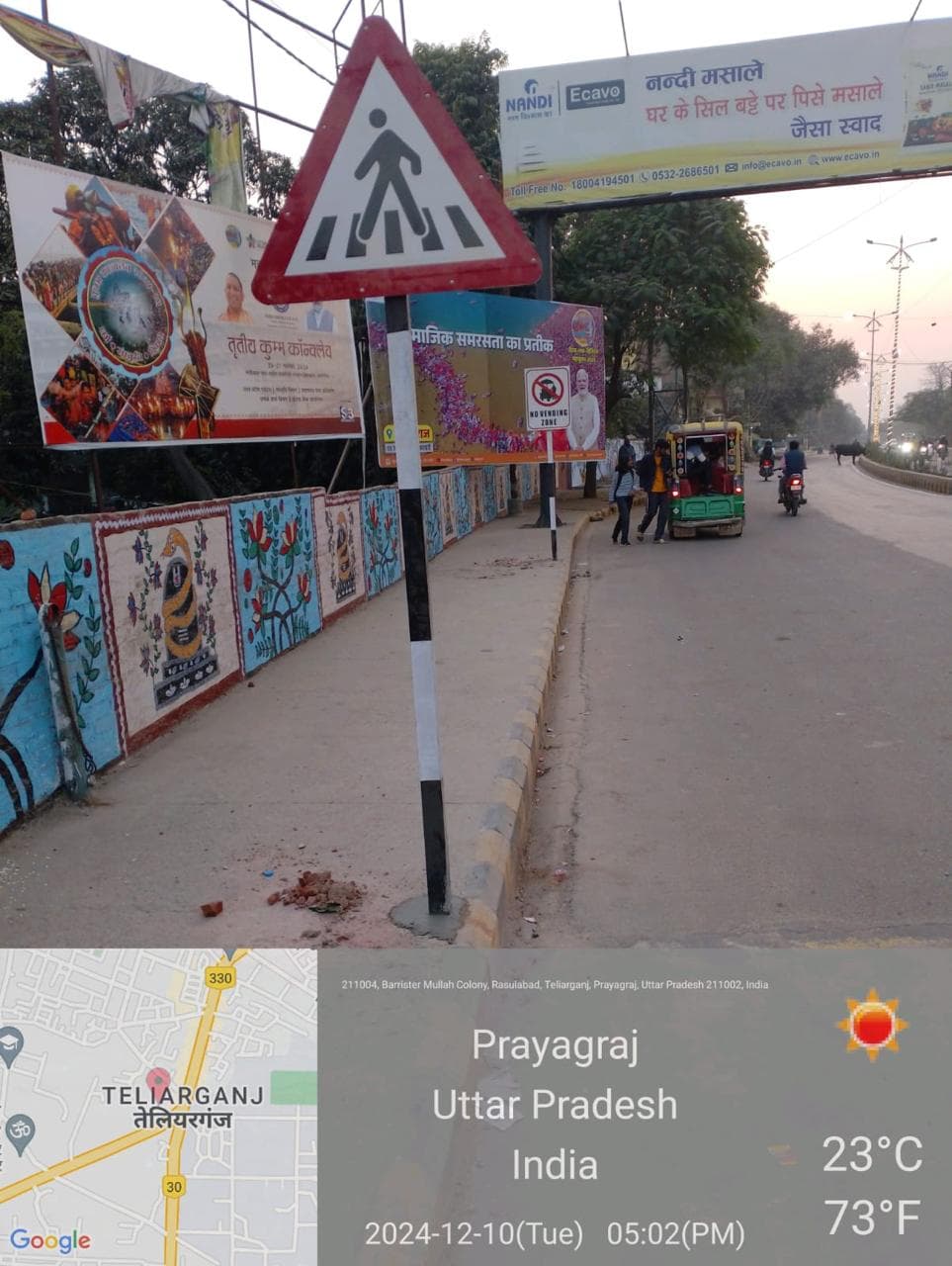
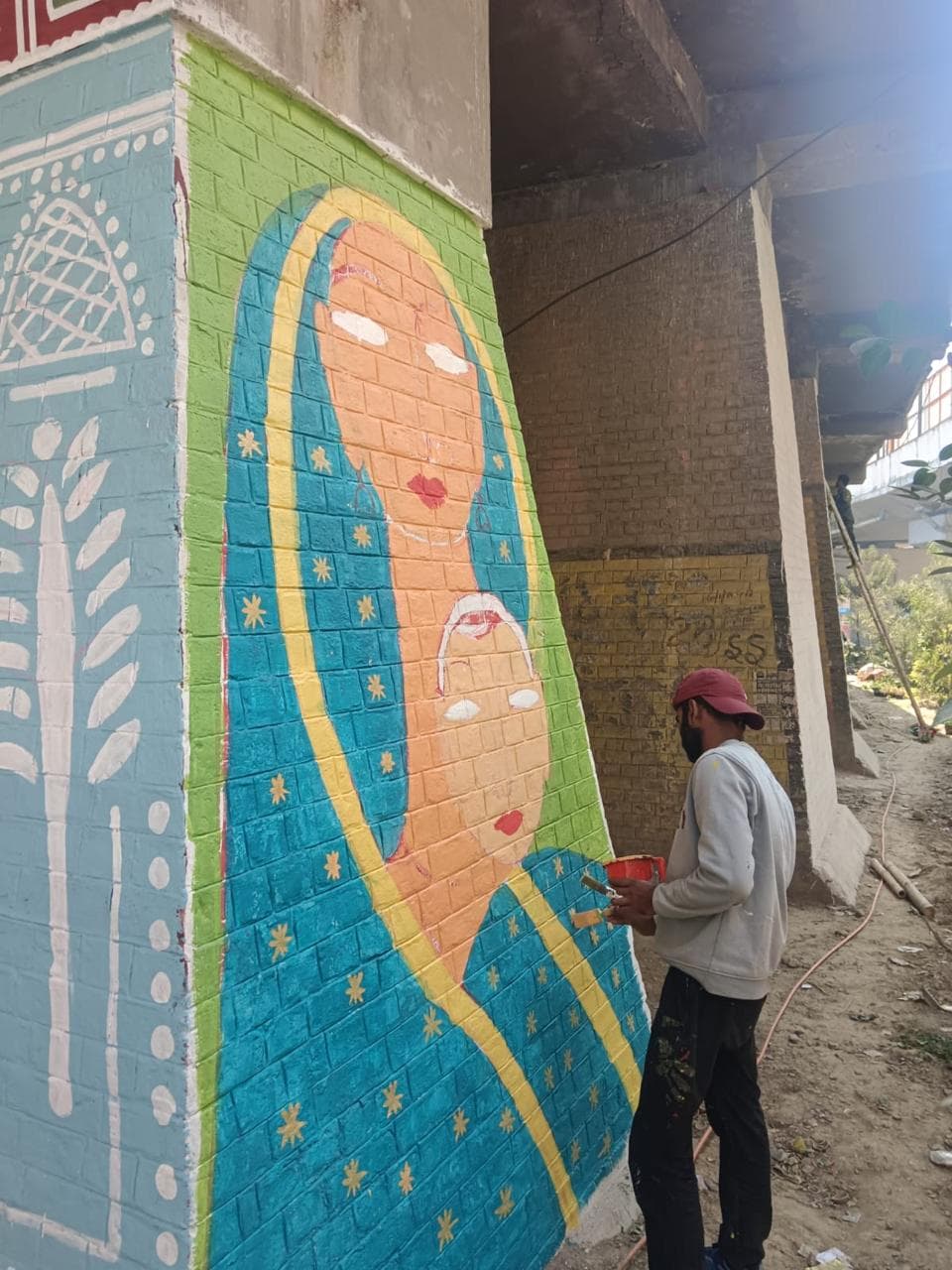
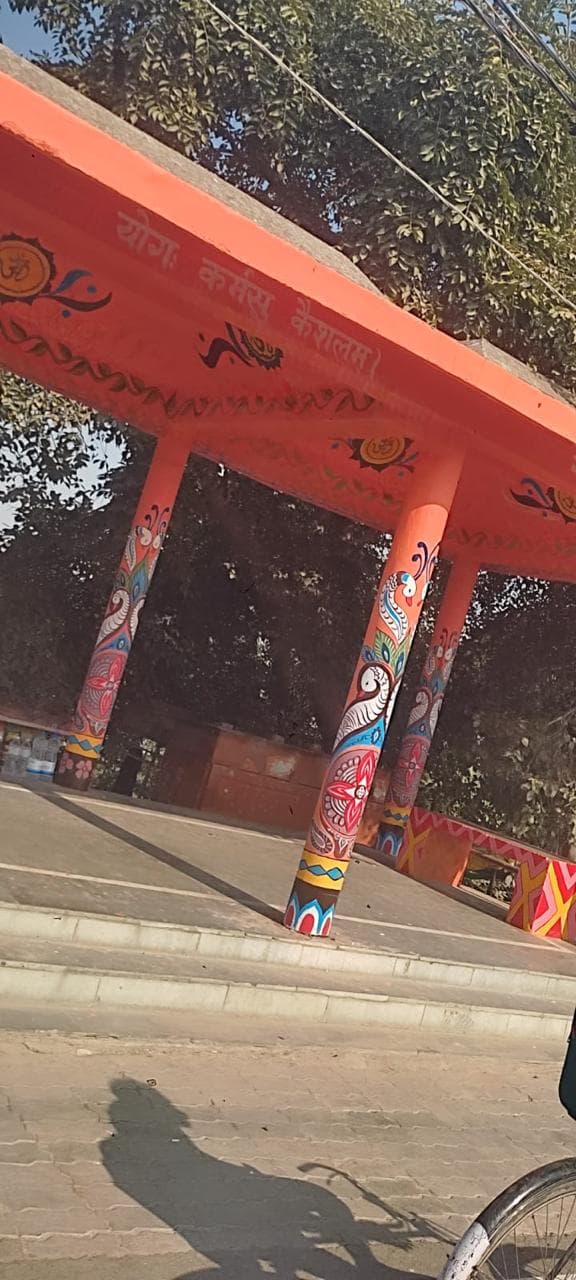
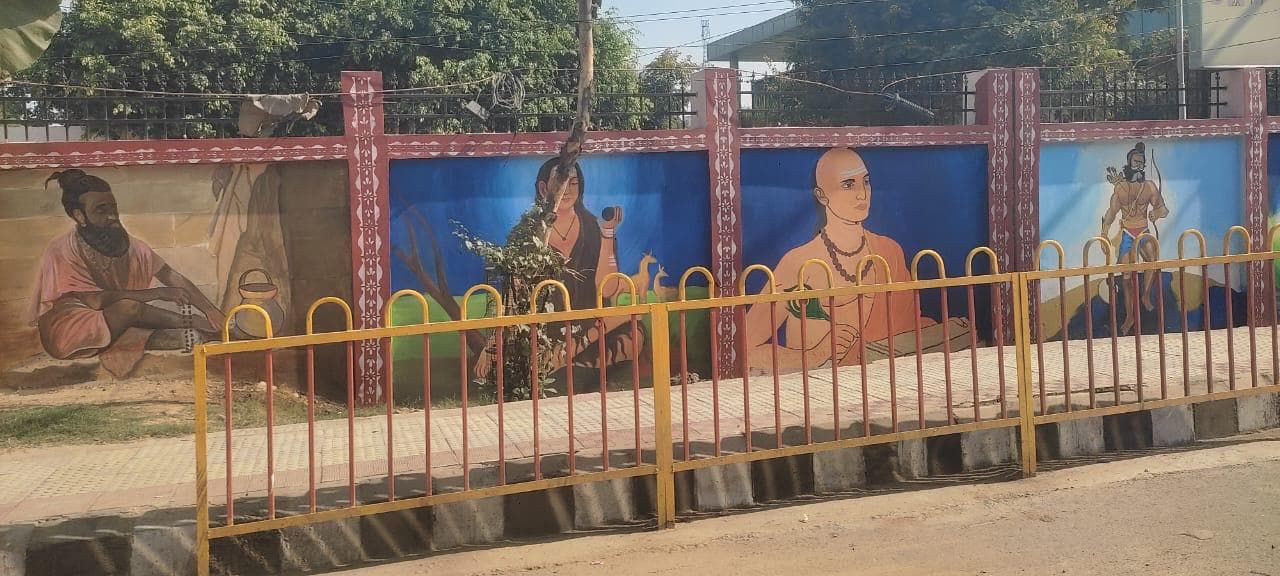
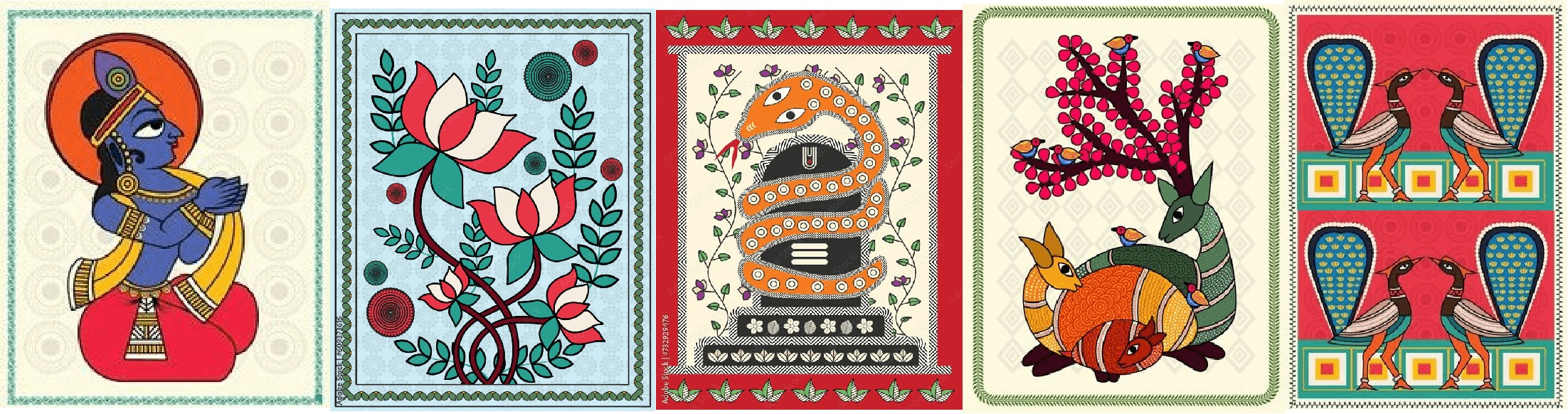
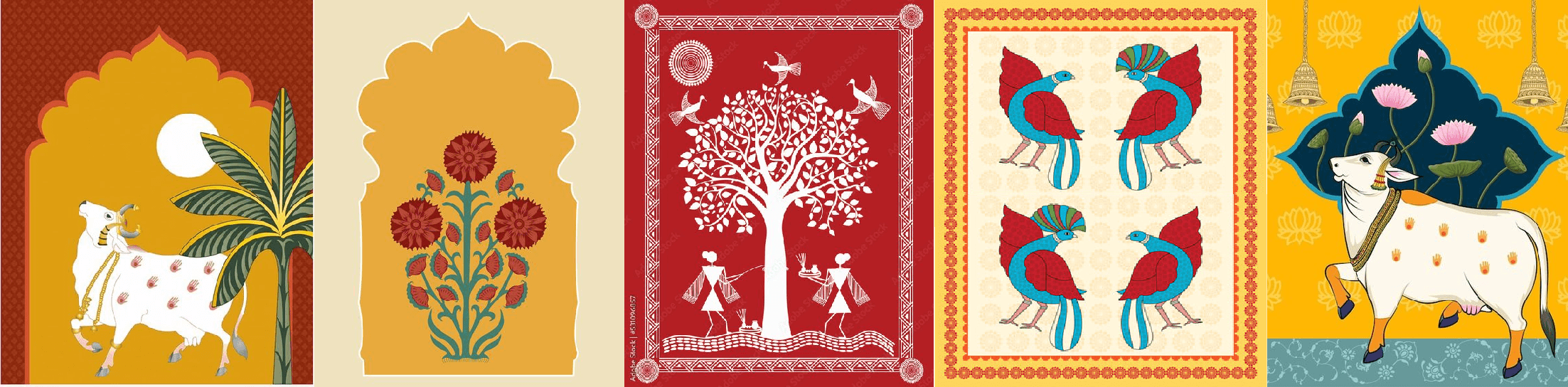
Murals & Paintings
The inspiration comes from religious entities, animals, and objects representing religion and spirituality, everyday Indian objects, and nature. The ancient art forms of Madhubani and Pichwai painting are reimagined in a contemporary form with the use of a vibrant and festive colour palette matching the theme of the auspicious Kumbh Mela.

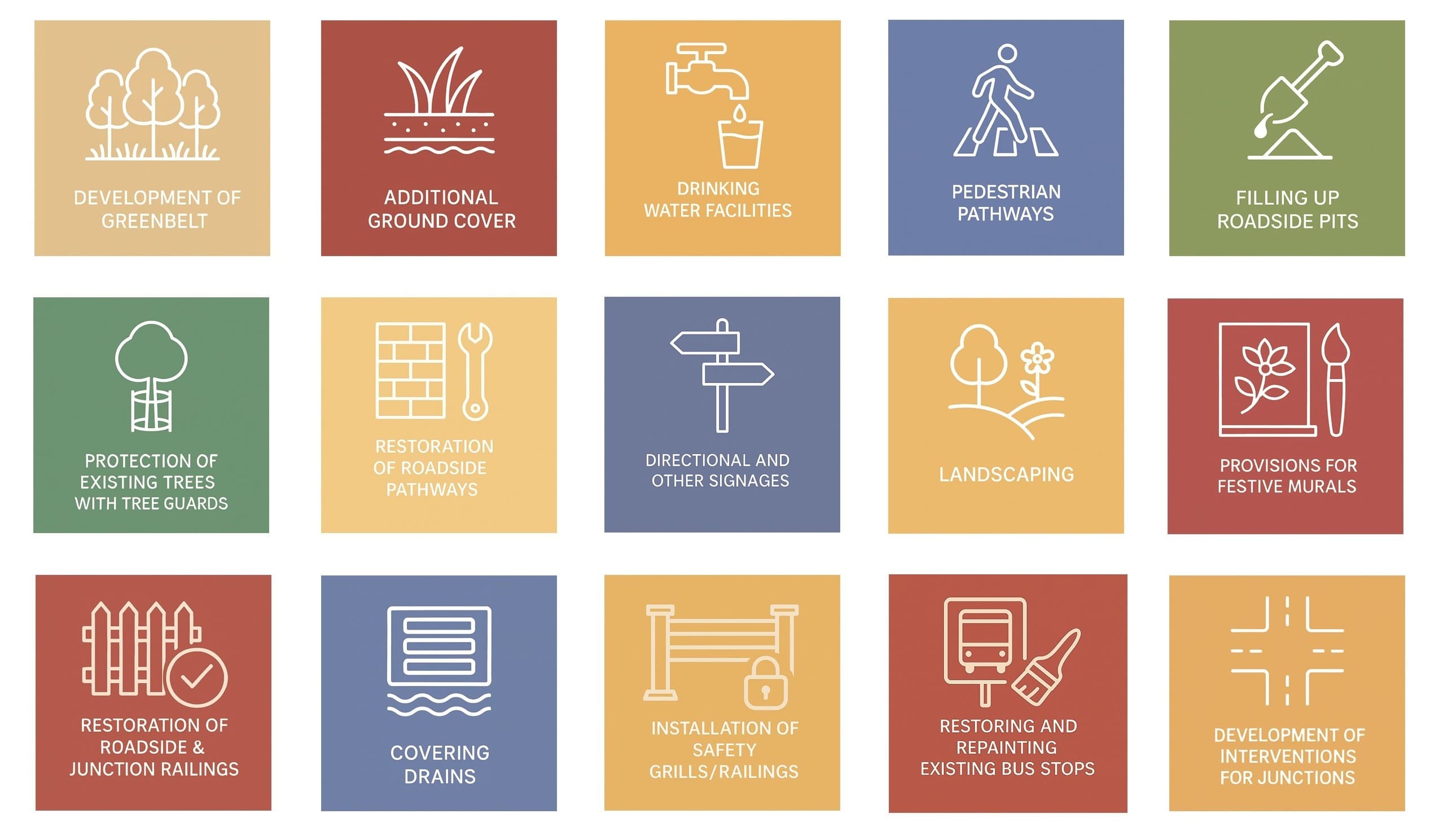
Design Intervention
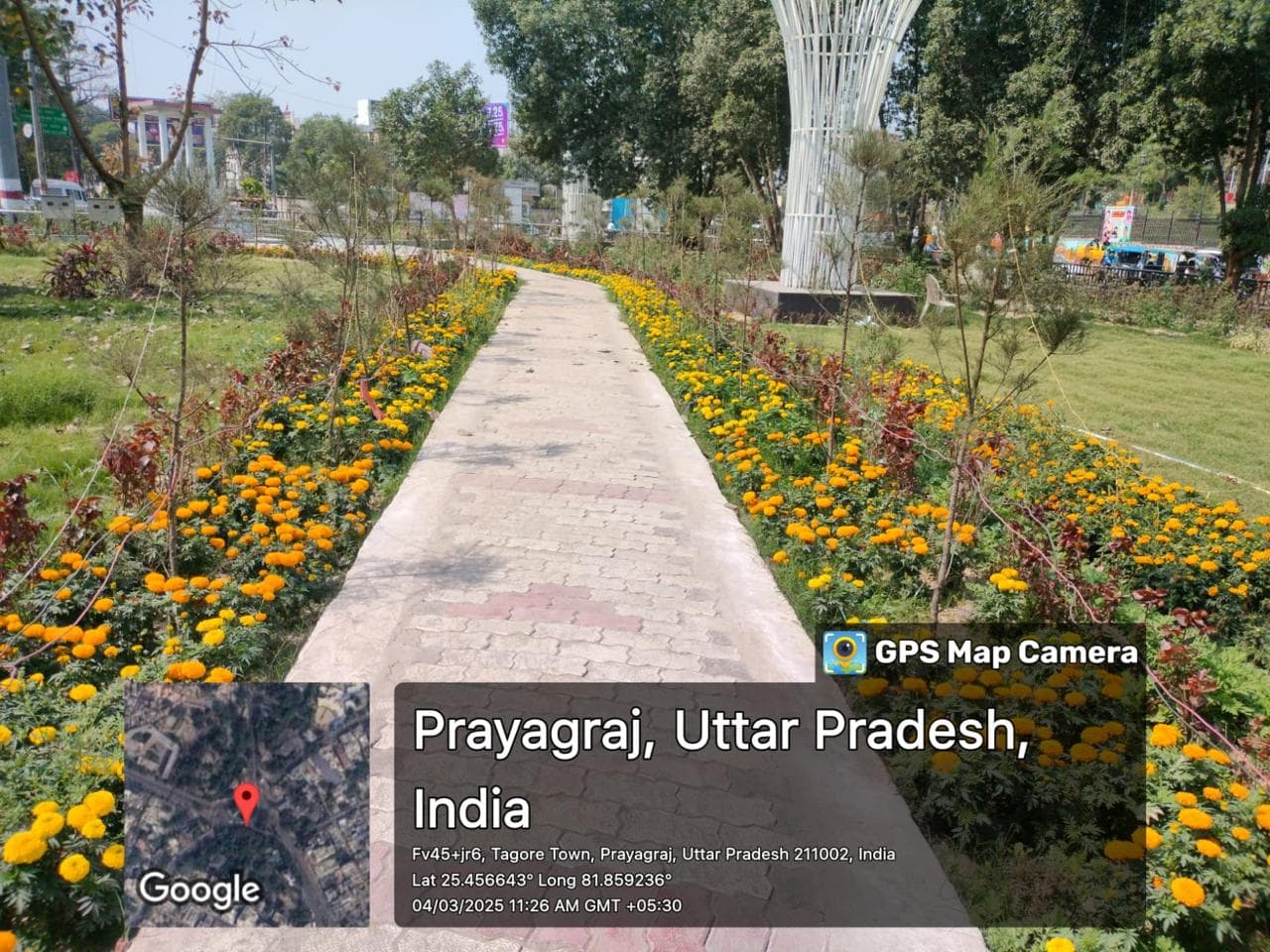
Plantation Scheme
Indigenous Plant Species Layering Strategy
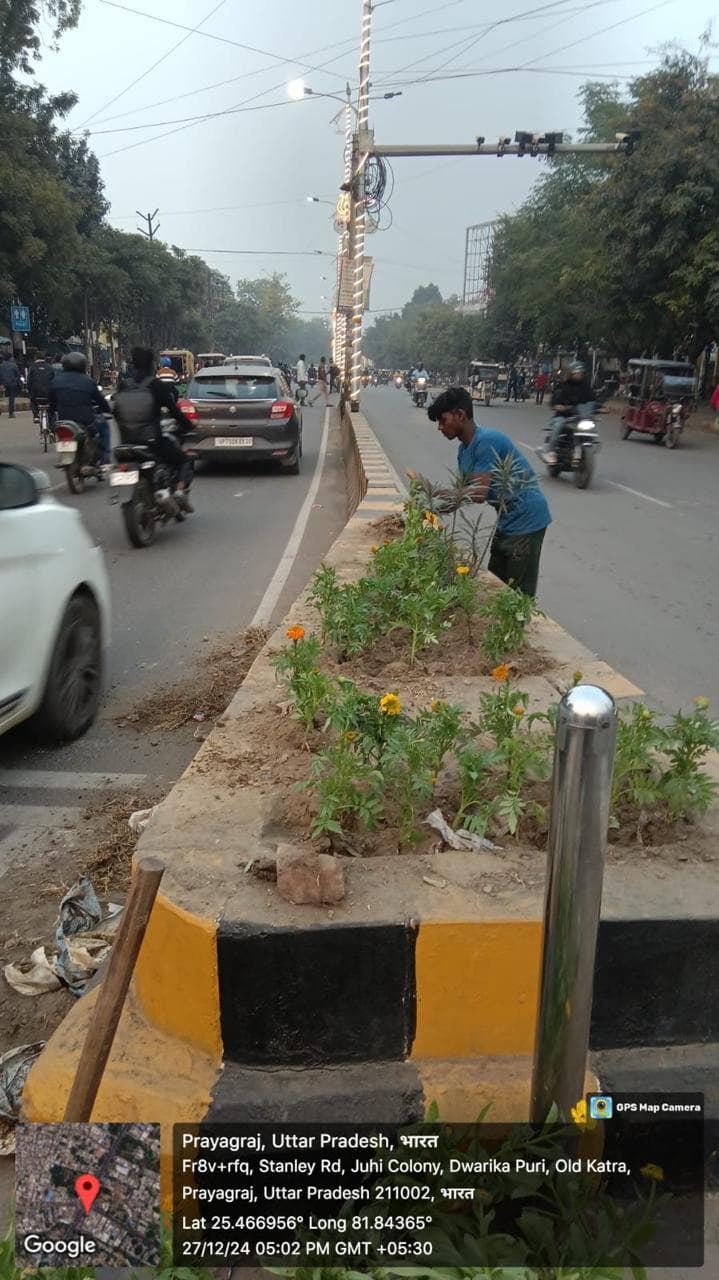
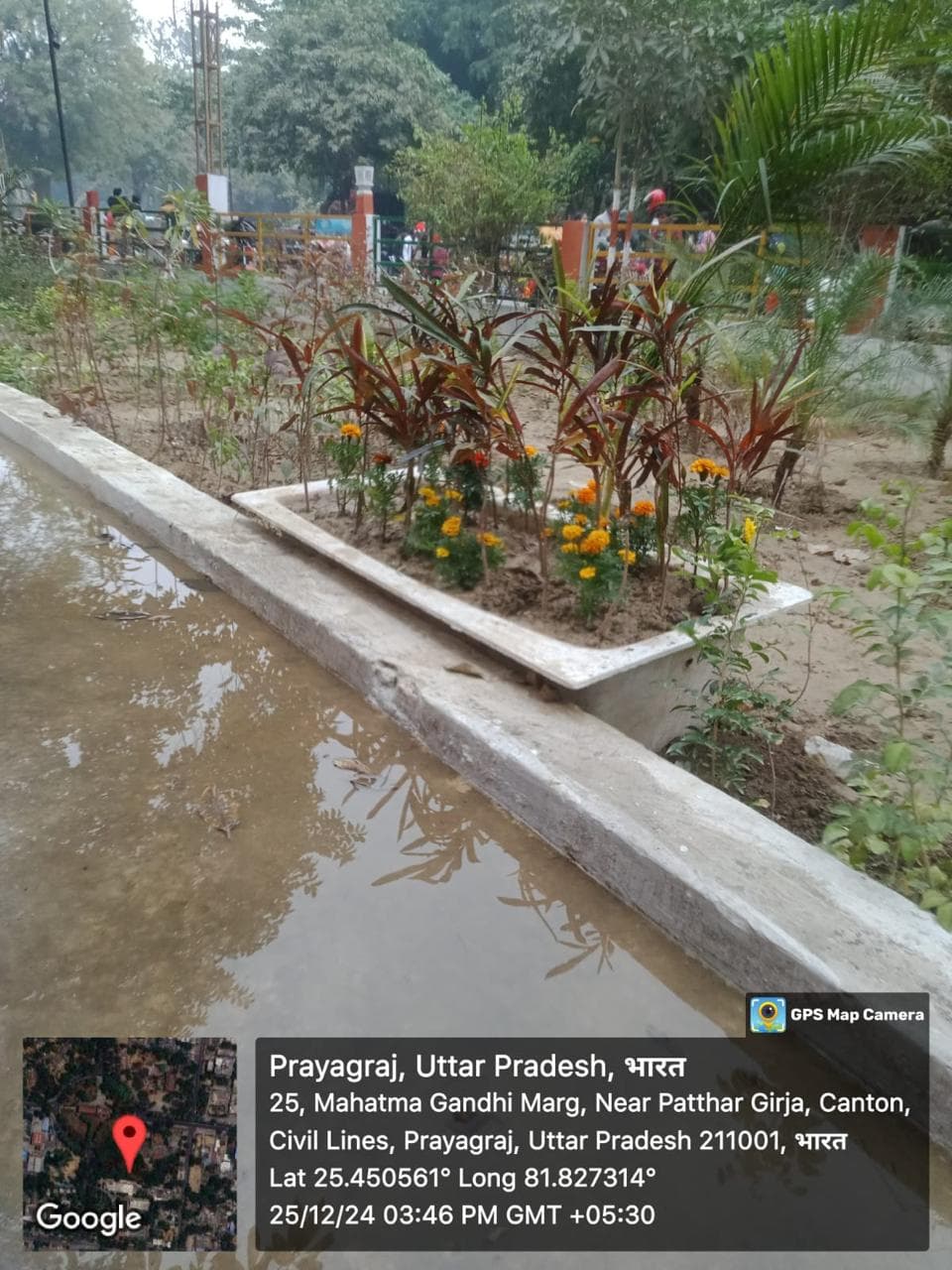
Use of indigenous plant species layered in different combinations for greenbelts, roadsides, flyovers, and urban avenues. This system improves visual aesthetics, ecological diversity, pollution buffering, and roadside safety.
Dwarf Hedge & Ground Cover
Low-height hedges and ground covers that define the roadside edge, prevent soil erosion, and provide a neat green boundary.
Flowering Shrubs
Flowering shrubs and medium-height plants that add colour, biodiversity, and visual depth to green corridors.
Tall Flowering & Foliage
Taller flowering and foliage plants forming the back layer for pollution buffering, ecological diversity, and roadside safety.
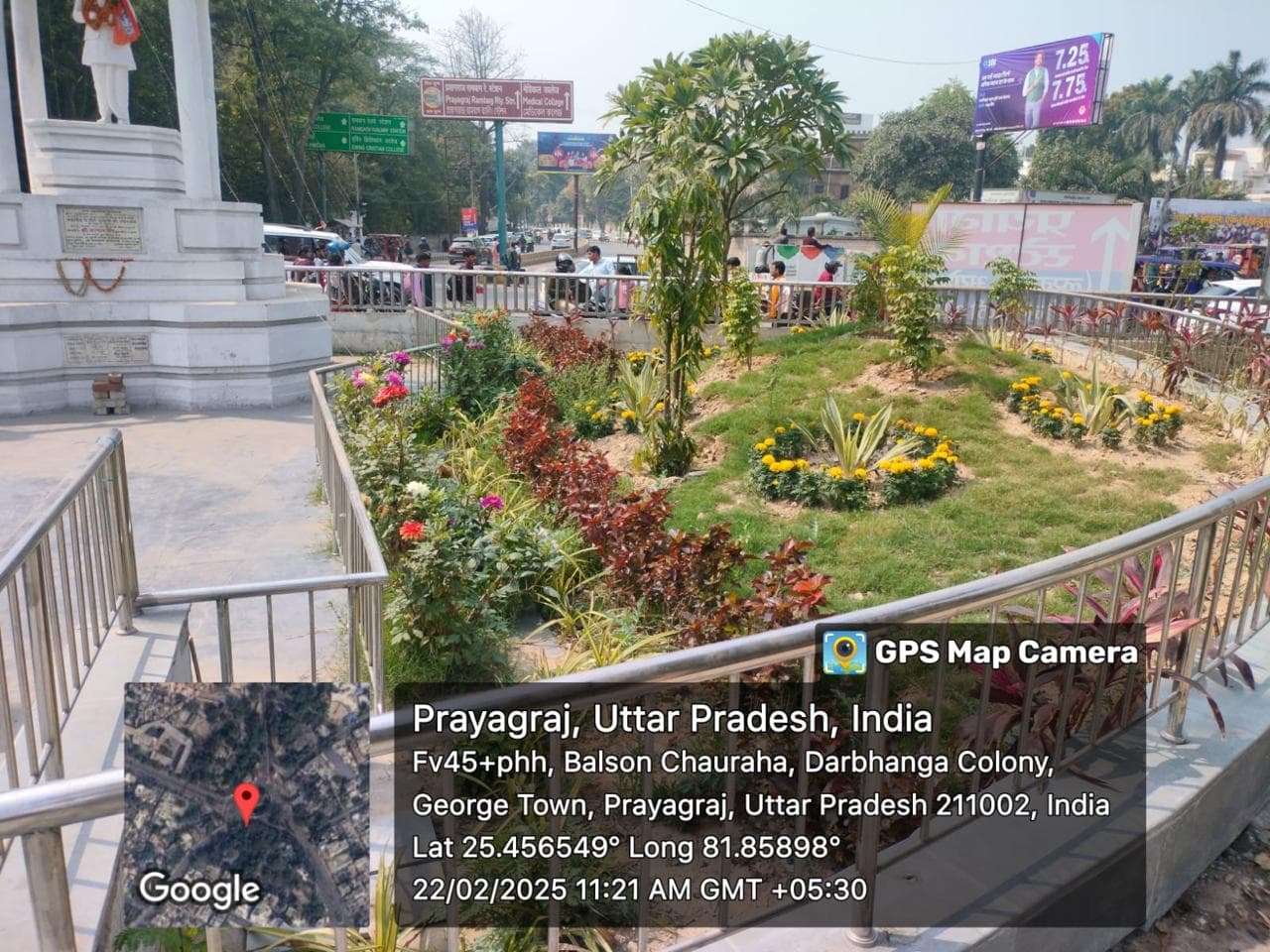
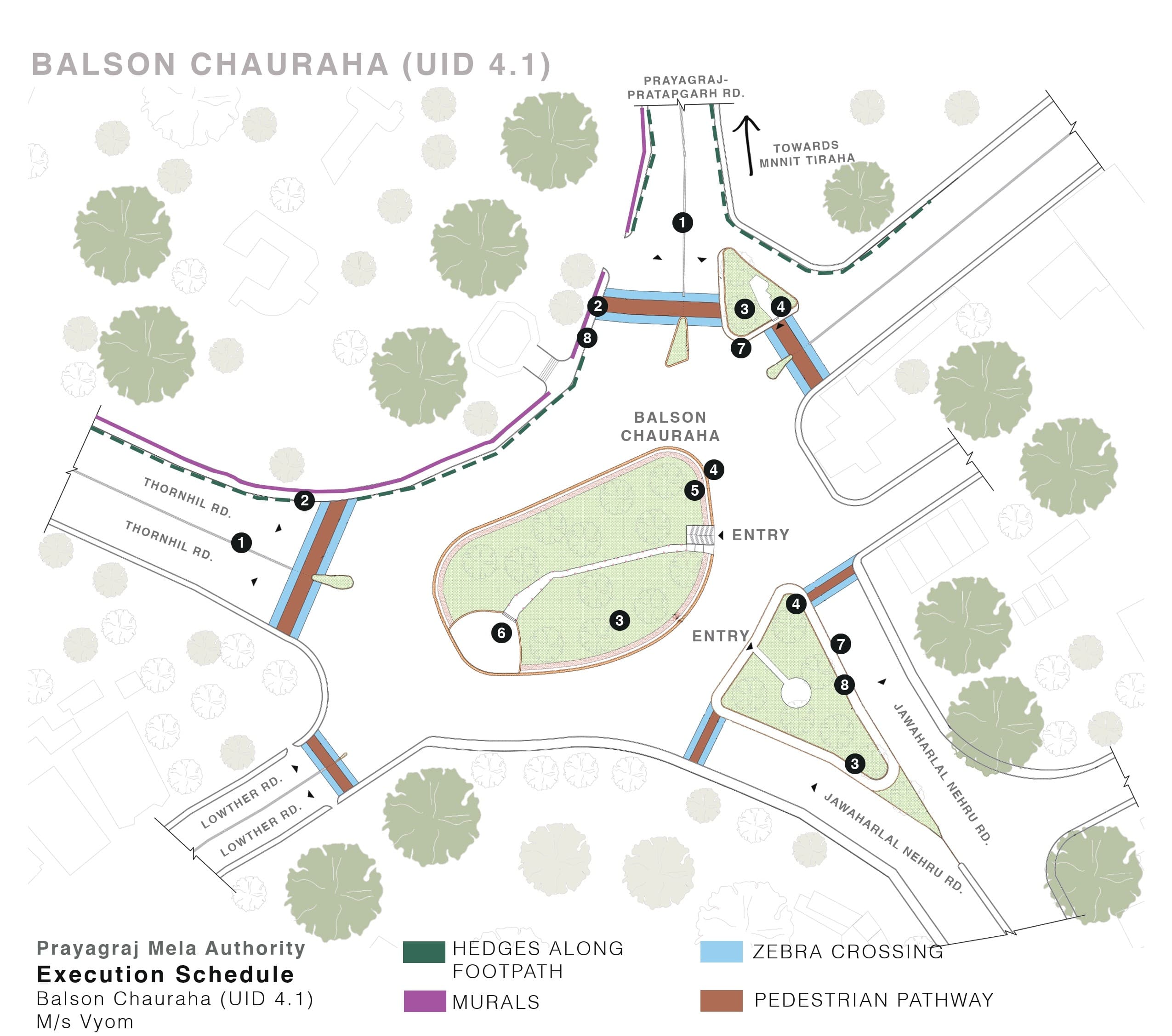
Balson Chauraha — Design Interventions Implemented
Legend
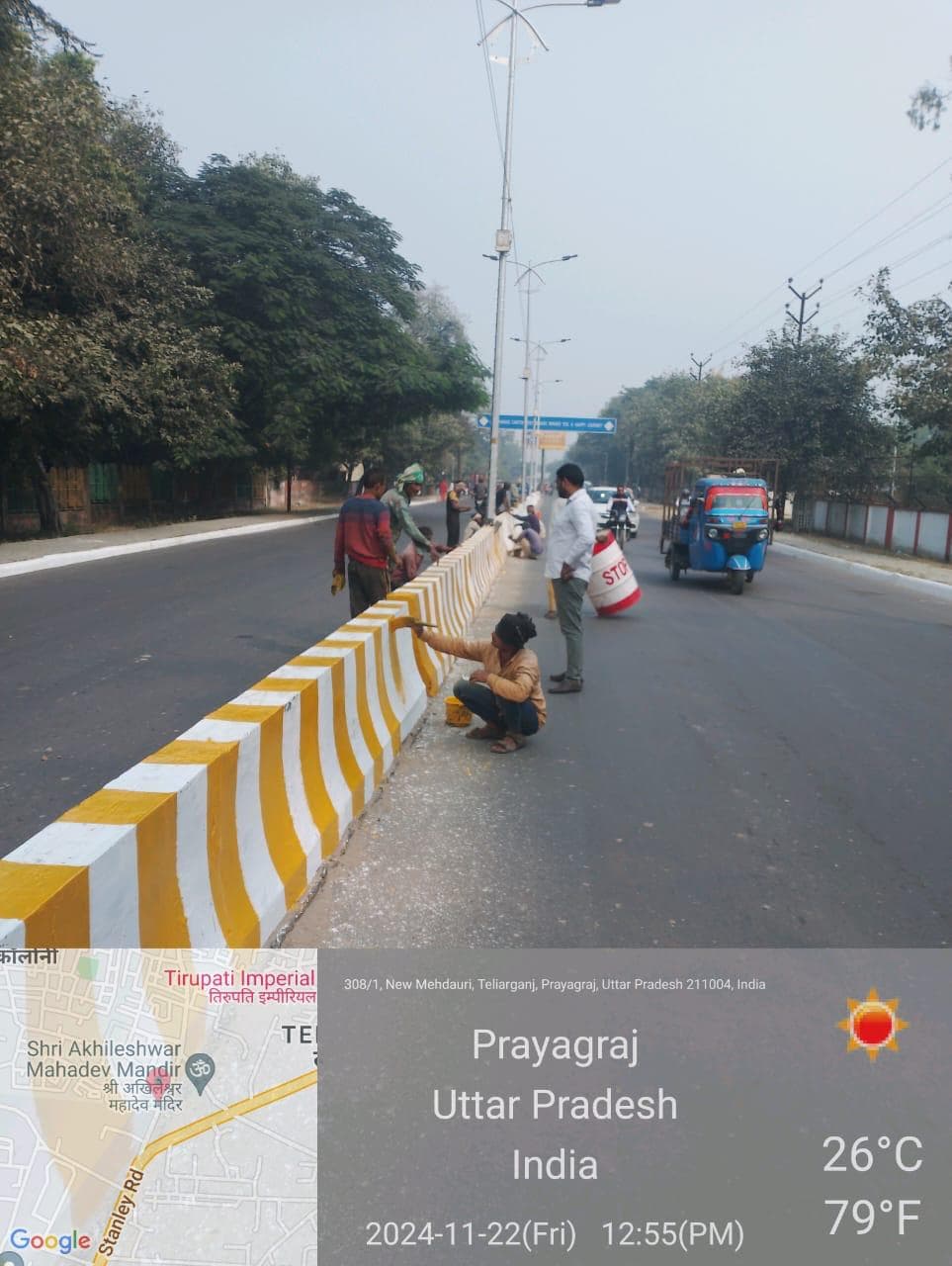
- Repainting Median
- Road Signages as Required
- New Groundcover
- Restoring & Repainting Existing Boundary of Junction
- New Jogging Track Around the Junction
- New Solar Outdoor Bollard LED Light
- Restoring & Repainting Existing Kerbstones
- Restoring & Laying Interlocking Pavers
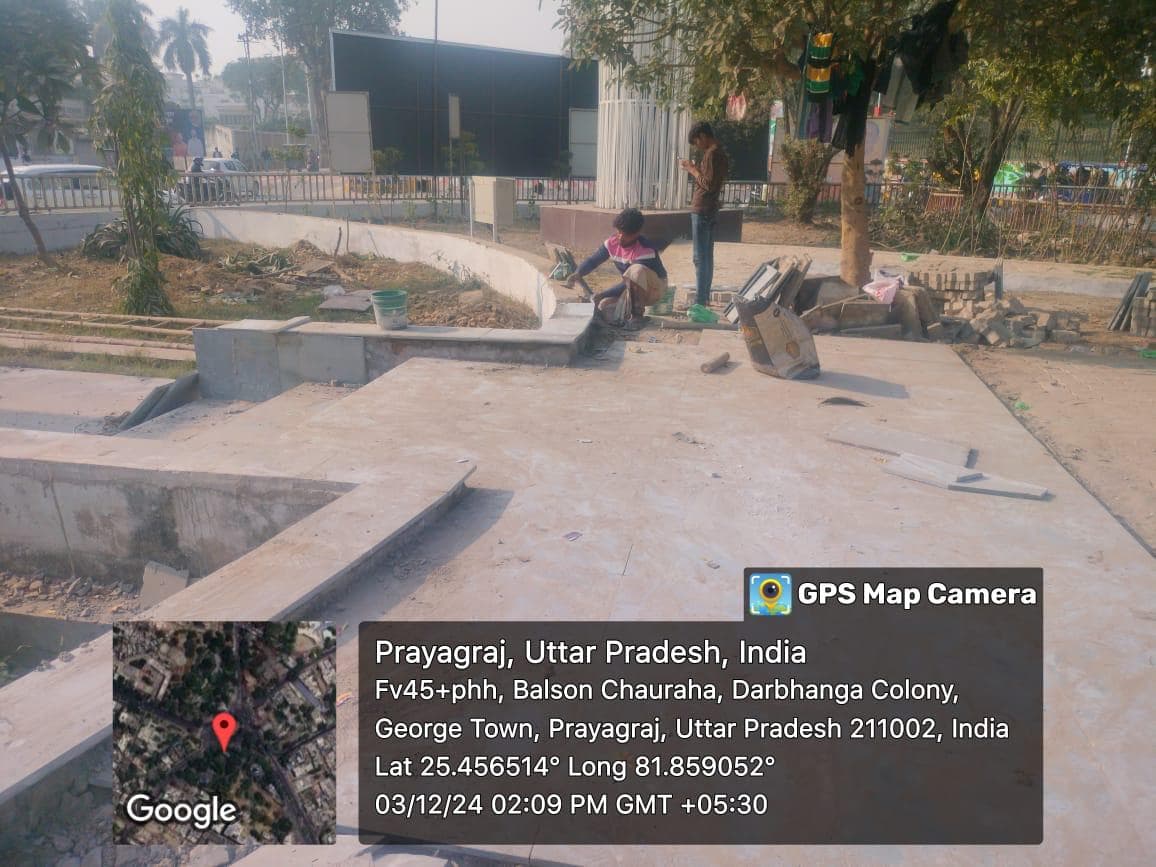
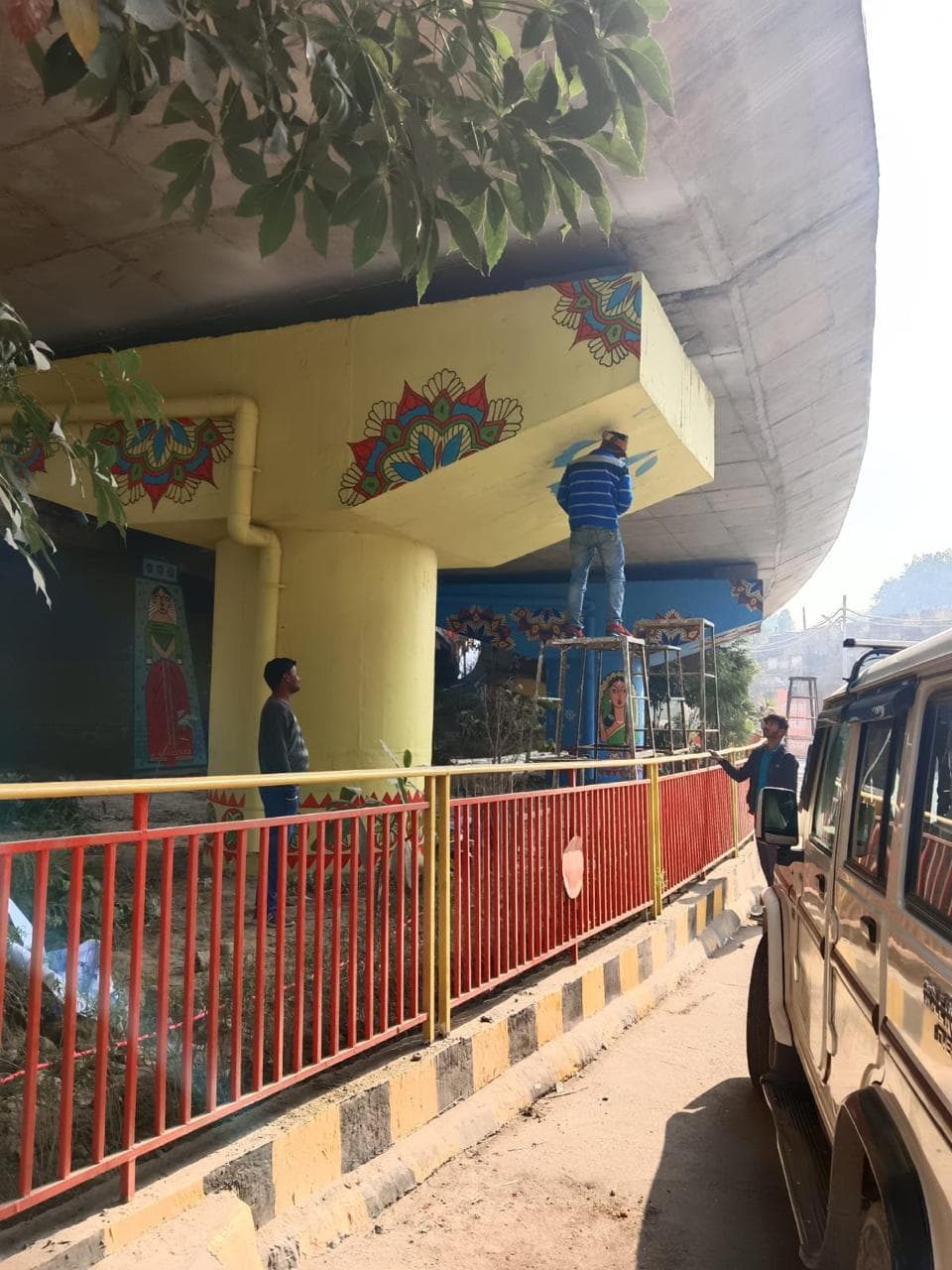
On-Site Implementation